Pourquoi mettre en place un SIRH : Les avantages clés du SIRH pour votre entreprise
Avec l’avancée technologique, tous les métiers ont pris une nouvelle dimension, y compris celui des ressources humaines.
Aujourd’hui, la majorité des professionnels RH considèrent qu’un SIRH est un outil incontournable (environ 70 % des responsables RH, selon une étude menée en 2021 par Deloitte), leur permettant ainsi une meilleure gestion, une optimisation des opérations, une automatisation de certaines tâches et surtout, la possibilité de se consacrer à d’autres actions stratégiques et innovantes.
Dans cet article, nous allons répondre à la question : “Pourquoi mettre en place un SIRH ?”, afin de comprendre les raisons qui font de lui une solution indispensable aux entreprises. Aussi, à la fin de l’article, découvrez comment mener à bien son projet de digitalisation RH pour maximiser sa valeur ajoutée.
What is an HRIS?

Définition
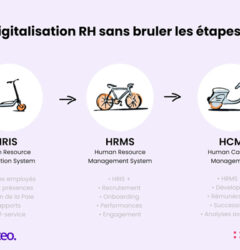
Pour répondre à la question “qu’est-ce qu’un SIRH ?”, c’est un logiciel qui regroupe un ensemble d’outils, permettant de gérer des informations et des processus RH au sein d’une organisation. Il joue un rôle essentiel dans la digitalisation et l’amélioration des opérations RH.
Types de SIRH existants
- SIRH de gestion administrative des collaborateurs
- SIRH de gestion du temps et de la paie
- SIRH de gestion des performances
- SIRH d’analyse des données RH
- SIRH tout-en-un (comme Talenteo)
Avantages et fonctionnalités d’un SIRH
Les avantages d’un SIRH sont nombreux, que ce soit pour les équipes RH, les collaborateurs ou l’entreprise de façon globale. Comment les SIRH redéfinissent les ressources humaines ? C’est ce que nous allons explorer en détails dans cette section.

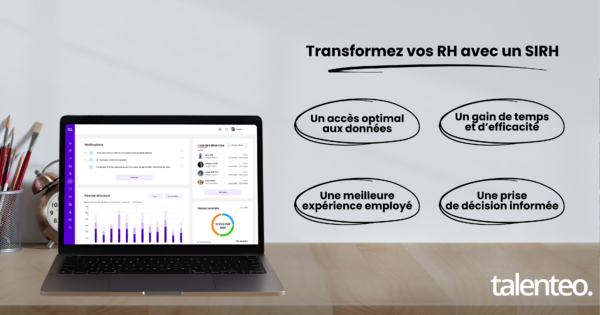
Pourquoi mettre en place un SIRH : Données centralisées pour un meilleur accès
Gestion des dossiers employés
Des informations personnelles et expériences professionnelles, jusqu’aux historiques et activités relatifs aux postes, la mise en place d’un logiciel SIRH vous permet de digitaliser et regrouper toutes ces informations en un seul endroit, avec la possibilité d’effectuer des recherches spécifiques grâce aux filtres de sélection. Cela permet non seulement d’avoir un meilleur accès aux données des employés, mais aussi d’économiser en temps, énergie et en papier !
Gestion du temps de travail
Vous pouvez suivre les temps d’arrivée, de pause et de départ de vos collaborateurs en temps réel et au même endroit, avec la possibilité de donner accès aux managers d’équipes. Cette fonctionnalité favorise en premier lieu le suivi des activités des employés, puis elle facilite d’autres aspects liés à la gestion des ressources humaines, comme la paie. Certains SIRH permettent également la connectivité et la synchronisation avec les pointeuses physiques (tels que Talenteo).
Suivi des absences
Une solution SIRH vous permet de gérer les absences au travail en toute efficience, ce qui aide les équipes RH et les managers d’équipe à maintenir le suivi de tous les collaborateurs, en temps réel et au même endroit. Aussi, il est possible de générer à tout moment des rapports d’absence personnalisés, ou d’en garder la traçabilité sur votre logiciel RH. Ces données d’absences seront par la suite synchronisées pour le calcul de la paie.
Gestion des congés
La gestion des congés à travers un SIRH devient une partie de plaisir. Vos collaborateurs peuvent effectuer leurs demandes de congés directement sur le logiciel RH, ce qui vous permet d’en garder la traçabilité, d’éviter la mauvaise planification des ressources et d’y donner réponse en un seul clic. Bien entendu, les documents administratifs relatifs à cela sont générés par votre SIRH et les soldes de congés sont automatiquement mis à jour pour chaque employé.
Les SIRH et leur impact sur les processus RH : Gain de temps et de productivité dans sa gestion RH
Automatisation du calcul et des bulletins de paie
Étant donné que les données des présences, absences et congés existent déjà sur le SIRH, vous pouvez synchroniser les éléments de la paie et automatiser son calcul en un clic. Ce dernier vous permet également de créer et distribuer les bulletins de salaire aux employés et de générer les déclarations sociales et fiscales. Cela vous fait donc gagner énormément de temps (un logiciel comme Talenteo calcule la paie en 5 minutes pour tout effectif) et vous fait éviter les erreurs et les retards de salaires.
Gestion des prêts et suivi du remboursement
Le système d’information des ressources humaines prend en charge la gestion des prêts octroyés aux employés, en automatisant les retenues telles que prédéfinies par vous, en mettant à jour les montants restants et en permettant aux collaborateurs de consulter leurs historiques de remboursement en toute autonomie.
Edition des documents administratifs
Bien qu’une tâche relativement facile, la gestion des documents administratifs peut prendre beaucoup de temps à votre équipe RH. Cependant, il est possible après la mise en place d’un SIRH de générer automatiquement tout type de documents administratifs, comme les attestations de travail et les contrats, personnalisés avec les informations des employés et prêts à être distribués. De ce fait, un SIRH permet un gain de temps quotidien pour votre département RH.
Digitalisation des processus d’évaluation
L’évaluation annuelle constitue une partie importante de la gestion des ressources humaines. Cette option, intégrée dans certains SIRH dont Talenteo, permet d’optimiser cette opération et de se débarrasser des fichiers Excel aux feuilles interminables et des processus longs et décentralisés. Vous pouvez lancer et paramétrer vos campagnes d’évaluation sur la base d’indicateurs clés, aux populations ciblées et à la période voulue, tout en ayant un aperçu en temps réel de chaque étape.
Création et gestion de plans de formation
Après l’évaluation, vient l’étape du renforcement des compétences de vos équipes grâce à la formation. À l’aide d’un système d’information RH, vous pouvez créer et optimiser des plans de formation détaillés et les assigner aux collaborateurs concernés, en maintenant le suivi de leurs statuts. Cette fonctionnalité facilite à la fois le travail du service RH et renforce la satisfaction de vos employés.
L’intérêt d’avoir un SIRH dans son entreprise : Conformité légale
Gestion des taux de cotisations
La mise en place du SIRH dans son entreprise permet d’avoir la possibilité de gérer les taux de cotisation, en personnalisant les taux d’abattement propres à chaque collaborateur, si applicables. Ainsi, hormis le gain de temps remarquable, cette automatisation des déclarations vous évitera toutes les erreurs qui peuvent mettre en péril votre conformité légale.
Conformité aux lois changeantes
L’un des nombreux avantages clés du SIRH en SaaS (on peut en citer aussi ses coûts réduits), est bel et bien les mises à jour automatiques qui lui sont apportées. Outre des améliorations et des traitements de bugs, ces mises à jour comprennent également tout changement de lois pouvant impacter vos opérations RH, telles que la paie. Cet avantage vous évite de devoir rester constamment à l’écoute de tous ces changements et de devoir apporter à chaque fois les modifications nécessaires à vos opérations RH.
Génération des déclarations sociales et fiscales
On en a parlé brièvement dans la section de la gestion de la paie, mais ce point mérite d’être relevé encore une fois ici. Les logiciels SIRH vous permettent donc de générer automatiquement vos déclarations sociales et fiscales à chaque période de paie, que vous pouvez exporter en un clic. Cette fonctionnalité non seulement vous évite de traiter ce volet manuellement à chaque fois, mais aussi assure votre conformité d’un point de vue légal.
Les avantages clés du SIRH : Amélioration de l’expérience employé
Traitement des demandes d’employés
Le système d’information RH permet à chaque employé d’effectuer tout type de demandes, où qu’il soit et à tout moment. De votre côté, il vous permet le traitement en temps réel de ces demandes. Ces dernières sont triées par type et par priorité, les documents liés à cela sont automatiquement générés et distribués aux collaborateurs, après votre approbation. Un petit plus, c’est la possibilité d’en garder la traçabilité sur votre logiciel.
Création et attribution de plannings de shifts
Vous avez la possibilité de créer, modifier et assigner des plannings directement sur votre SIRH. Cela vous permet une meilleure planification des ressources, étant donné que les absences et les congés de vos équipes sont synchronisés, tout en évitant les chevauchements. Comment cette fonctionnalité du SIRH peut stimuler l’engagement des collaborateurs ? Ils ont la possibilité de consulter leurs horaires de travail à tout moment et d’être notifiés à chaque changement apporté à leur planning. Finis les manques de communication et de coordination entre les équipes !
Facilité de diffusion de l’information
En adoptant un SIRH comme Talenteo, qui permet l’accès non seulement aux managers mais aussi à tous les employés, la circulation de l’information devient beaucoup plus fluide au sein de votre entreprise. Vos équipes recevront instantanément les nouvelles annonces que vous publiez, ce qui favorise la bonne communication et améliore donc la satisfaction des collaborateurs.
Simplicité d’accès aux informations
L’accès des collaborateurs aux informations devient beaucoup plus simple avec un SIRH. Que ce soit leurs informations personnelles, leurs soldes de congés, leurs fiches de paie ou bien les informations de contact de leurs collègues, répertoriées dans un annuaire d’employés, accessible à tout moment.
Avantages de la mise en place d’une solution SIRH : Une prise de décision plus informée
Analyse des données
Les SIRH offrent une vue d’ensemble sur des données RH clés (comme l’effectif, les taux de turn-over et d’absentéisme, différentes répartitions d’employés, etc), regroupées sous forme de tableaux de bord intuitifs, facilitant ainsi l’accès à l’information, l’analyse des données et la prise de décision par les responsables concernés.
Générations de rapports RH
C’est probablement l’une des fonctionnalités préférées des responsables RH. Elle permet de générer tout type de rapports RH et de les personnaliser selon le besoin, à l’aide des filtres de sélection (à titre d’exemple, un filtrage par compétence, département, type de contrat, etc). Les rapports RH assurent la pertinence de la prise de décision et un bon développement des ressources humaines. Cette génération automatique rend la tâche de reporting beaucoup plus simple et dépourvue d’erreurs.
Comment mener à bien son projet SIRH ?

Mener à bien un projet SIRH requiert une approche structurée qui repose sur le suivi rigoureux des étapes clés de la digitalisation RH. Il est essentiel d’identifier les besoins spécifiques de votre organisation et de vos équipes afin de choisir la solution la plus adaptée à la fonction RH de votre entreprise. L’implication des parties prenantes, la planification, le déploiement, ainsi que la formation des équipes sont cruciales pour garantir une intégration réussie du SIRH dans votre entreprise. En restant vigilant et proactif tout au long du processus, vous optimisez les performances de votre service RH et prenez des décisions plus stratégiques et informées.
Conclusion
La mise en place d’un système d’information des ressources humaines est une démarche importante qui offre de nombreux avantages, tant pour les employés que pour la direction. En optimisant toutes les opérations RH et en automatisant certaines tâches, les professionnels du métier peuvent se libérer des fardeaux du quotidien pour se concentrer sur des aspects qui ont plus de valeur ajoutée, tels que contribuer au développement des collaborateurs et veiller sur leur bien-être. Pour toutes les raisons exposées ici et bien d’autres encore, on peut donc dire qu’investir dans un SIRH est aujourd’hui une nécessité pour les entreprises en quête de croissance.
Avec Talenteo, nos équipes vous accompagnent durant toutes les étapes de votre digitalisation RH. Ainsi, vous pourrez profiter pleinement de toutes ces fonctionnalités, tout en ayant le bon support nécessaire à votre adaptation et celle de vos équipes.
FAQ : Tout savoir sur les SIRH
Pourquoi mettre en place un SIRH ?
Un SIRH propose des outils qui permettent d’avoir une gestion optimisée des ressources humaines, une centralisation des données, une automatisation de toutes les tâches chronophages et une meilleure conformité légale. Un SIRH aide également à améliorer la productivité et réduire les erreurs humaines.
Quels sont les objectifs d’un SIRH ?
Les objectifs principaux sont l’amélioration de la productivité, l’automatisation des tâches administratives et l’optimisation des processus RH, tout en offrant une meilleure expérience utilisateur aux équipes.
À quoi sert un logiciel SIRH ?
Un logiciel SIRH sert à gérer l’ensemble des fonctions RH, comme la paie, les congés, les évaluations des collaborateurs, le recrutement, et bien plus encore. Il permet également d’effectuer des analyses prédictives pour soutenir la prise de décisions.
Pourquoi investir dans un SIRH à plusieurs modules ?
Investir dans un SIRH à plusieurs modules (all-in-one) présente de nombreux avantages, tels qu’un gain de temps, une meilleure prise de décision grâce à l’analyse des données, une augmentation de la satisfaction des équipes et une réduction des coûts liés aux erreurs administratives.