How to Choose the Best HR Software and HRIS Software in 2024
By 2024, human resources management will no longer be limited to administrative tasks. Today, HR software—or HRIS (Human Resources Information Systems)—plays a crucial role in the digital transformation of businesses. It enables the centralization of information, the automation of processes, and the improvement of the employee experience. But with so many options available, how do you choose the best HR software for your organization?
In this article, we’ll walk you through the essential steps for choosing HR software that meets your needs, as well as the must-have features to look for. We’ll also discuss why it’s crucial to implement an HRIS in 2024 and the key questions to ask potential vendors.
Key steps for choosing the right HR software for your business
The first step in choosing the right HR software is to assess your company’s needs. Every organization has unique requirements when it comes to human resources management, and it is crucial to clearly identify the features that are essential for your HR processes.
1. Assess your company’s HR needs
Start by making a list of your company’s specific human resources management needs. Ask yourself the following questions:
- Which HR tasks are the most time-consuming and could be automated?
- Do you need a talent management system for recruitment and training?
- Is payroll management complex and does it require a specialized tool?
- How large is your company, and how many employees will be using the HR software?
By answering these questions, you’ll gain a clear understanding of the priorities you need to address with your future HR software.
2. Establish selection criteria
Once your needs have been identified, it is important to choose the criteria you will use to evaluate the various solutions available on the market. Criteria to consider include:
- Functional coverage : The software must cover all your human resources management needs, from payroll to talent management.
- Usability and user-friendliness : Good HR software should be easy to use for HR professionals, managers, and employees.
- Data security : Ensure that the software complies with security standards, including the GDPR.
- Compatibility with your existing systems : The software must be able to integrate easily with your existing tools, such as payroll systems or CRMs.
3. Engage stakeholders
Selecting HR software should not be a decision made solely by the HR department. Involve all stakeholders in the selection process, including CEOs, CFOs, operational teams, and the IT department. Each group will have specific needs and different expectations regarding functionality and usability.
4. Test the solutions
Before making a final decision, it’s essential to test several options. Request personalized demos and try out trial versions of the HR software that has caught your attention. This will give you a clear idea of the user interface, features, and responsiveness of technical support.
Comparison of the Best HR and HRIS Software for 2024
The HR software market is vast and constantly evolving. To help you make an informed choice, here is a comparison of the best HR and HRIS software for 2024, taking into account various criteria such as feature set, ease of use, and flexibility.
1. Workday
Workday is a comprehensive HR software solution that covers talent management, payroll, and performance management. It is particularly valued for its user-friendliness and advanced reporting capabilities.
2. Talentsoft
Talentsoft is another major player in the HR software market. It stands out for its talent management tools and training modules. Talentsoft is particularly well-suited for growing companies looking to optimize skills management.
3. Talenteo
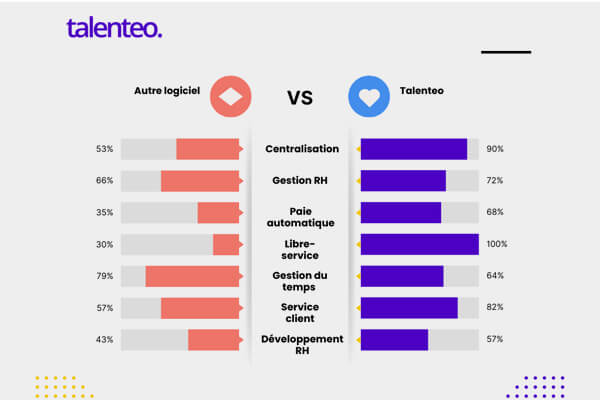
Talenteo offers a comprehensive HR and payroll solution, featuring specific tools for payroll and absence management, time tracking, and administrative tasks. It is ideal for small and medium-sized businesses looking for reliable and user-friendly HR software.
4. PayFit
PayFit is an HR solution focused on payroll and absence management. Its intuitive interface and time-tracking tools make it a popular choice for small businesses and startups.
5. Lucca
Lucca offers a suite of HR modules, including leave management, expense reporting, and time tracking. It is particularly valued for its flexibility and modular approach, which allows companies to purchase only the features they need.
Why use HR software or an HRIS in 2024?
HR software has become indispensable for modern businesses. Here’s why it’s crucial to invest in HR software in 2024:
1. Centralization of HR data
With HR software, all employee information is centralized in one place. This simplifies HR data management and provides quick access to information, whether for managers or employees via an HR portal.
2. Improving employee engagement
Modern HR software allows employees to handle certain administrative tasks on their own, such as requesting time off or updating their personal information. This helps improve employee satisfaction and reduces the administrative burden on HR teams.
3. Data-driven decision-making
With advanced reporting features, HR software provides actionable data that helps executives make informed decisions. Whether it’s for analyzing employee performance or anticipating hiring needs, HR software is a strategic asset for the company.
What features does modern HR software offer?
Good HR software should offer a comprehensive range of features to meet your company’s diverse needs. Here are some of the essential features to look for:
1. Talent Management
Talent management is a crucial aspect of modern HR. HR software must include tools for recruitment, onboarding, training, and skills development.
2. Payroll Management
Payroll management is often one of the most important features of HR software. Make sure the software you choose can handle payroll accurately and in compliance with current regulations.
3. Tracking time and absences
Tracking work hours and managing absences are also essential features. HR software should allow employees to easily report their hours and request time off, while providing managers with an overview of team availability.
4. HR Portal
An HR portal allows employees to access their personal information, submit leave requests, and view their pay stubs. These features enhance the employee experience and streamline administrative tasks.
5. Reporting and Analysis
Reporting capabilities are essential for tracking HR metrics and making data-driven decisions. Good HR software should offer customizable reports that provide insights into employee performance, turnover rates, and much more.
Questions to Ask Potential Suppliers
When choosing HR software, here are a few questions to ask vendors to ensure you make the right choice:
- Where will the data be stored, and what security measures are in place?
- What customization options does the software offer to meet your specific needs?
- How does the HRIS software integrate with your existing tools?
- What customer support and training options are available?
- How sustainable is the software, and what is the developer’s long-term vision?
- What do users think about the features and ease of use?
Embracing Change to choose the right HR software
Implementing new HR software inevitably involves a change in how HR processes are managed within the company. To ensure a successful transition, it is crucial to properly prepare the teams and implement an effective change management strategy.
1. Involve the teams from the start
To minimize resistance to change, it is important to involve teams from the very start of the project. Organize information and training sessions to explain the benefits of the new HR software and answer employees’ questions.
2. Provide ongoing support
Ongoing support is essential to ensuring that the software implementation goes smoothly. Make sure your teams have the resources they need to quickly resolve issues and adapt to new features.
3. Monitor the results and make adjustments as needed
After implementing the software, it is important to monitor the results and adjust processes as needed. Use the reports and analytics provided by the software to identify areas for improvement and to optimize the use of the tool over time.
In 2024, choosing the right HR software is a strategic investment for your business. Whether you’re looking to optimize talent management, improve employee engagement, or streamline payroll processing, modern HRIS software can meet your needs. Take the time to clearly define your selection criteria, involve stakeholders, and test solutions before making a final decision. For personalized recommendations, feel free to visit Talenteo.com.