How Are HRIS Systems Transforming Human Resources?
Human Resources Information System (HRIS) software is at the heart of modern employee management.
HR software is often compared to human capital management (HCM) systems and human resources management systems (HRMS).
HRIS systems are ideal tools for human resources departments of all sizes.
No matter the industry, the size of the company, or its location, ALL companies have one thing in common: the true heroes of their workplace are found in human resources. Who else could handle:
- Recruitment
- Employee Recognition
- Employee Benefits Management
- Discipline
- The Role of a Corporate Advisor
- Compliance Monitoring
- And, of course, make sure everyone gets paid on time!
Human resources software—whether it’s HRIS, Human Capital Management, or HRMS—can help keep a company organized, growing, and compliant, regardless of the specific type. Let’s take a look at the human resources software systems available and how they can support an HR team.
Why Isn't HRIS as Complicated as It Seems?
These various terms mainly represent different ways of thinking about human resources software.
HRIS: Human Resources Information Systems. This term dates back to the earliest HR software, which focused on storing employee data. Initially, this mainly included personal information and payroll data. Today, HRIS software can store everything HR needs to know about an employee.
And a truly committed HR team wants to know more about its employees than just their salaries and benefits, or their schedules and timesheets. HRIS software helps the HR team create a comprehensive employee profile by providing a centralized location to collect feedback from managers, notes on an employee’s suitability for a promotion, or even their favorite birthday cake.
HCM: Human Capital Management: While an HRIS focuses on collecting information, an HCM system is used to develop a strategy based on that information. The primary goal of HCM software is to enable executives to make strategic decisions regarding onboarding, professional development, and performance management. With HCM software, HR can ensure that the workforce is engaged, productive, and on track to reach its full potential.
HRMS: Human Resources Management System. The simplest way to describe an HRMS is to think of it as a combination of the information management capabilities of an HRIS and the broader strategic planning capabilities of HCM. Essentially, HRMS software (such as Talenteo) covers all aspects of an HR manager’s responsibilities. It can function as the flagship of a suite of software, containing features that are sometimes offered separately, such as applicant tracking systems (ATS), learning management systems (LMS), or benefits management tools.
With this understanding, let's take a closer look at an HRIS.
The two pillars of HRIS:
Pillar I: Organizational Design
The HRIS helps ensure organizational consistency across the entire company. It does this by automating many key data collection processes, so that the HR team no longer has to remember to request X. The system makes the management of these tactical functions more automated while, in a way, encouraging employees to develop their own profiles.
This need for a centralized, scalable, and consistent data environment is important, but it also takes on an added sense of urgency when we look to the future.
Pillar 2: Employee Data Management
The purpose of collecting employee data is, of course, not just to have it, but to use it. An HRIS makes this task easier for HR teams. For example, it can help HR track and plan an employee’s career path, including growth plans and promotion milestones. In doing so, areas requiring adjustments will be quickly identified and addressed, just as career growth paths can be mapped out and managed.
How Is HR Software Revolutionizing HR Management?
Software is changing the way HR works. Over time, the role of an HR specialist has shifted from being primarily administrative to focusing more on developing workforce management strategies to achieve company goals. According to our estimates, HR teams spend up to 70% of their time on simple, inefficient administrative tasks. Not only was this time-consuming, but calculations done using spreadsheets or on paper often led to costly errors that had to be corrected later.
HRIS software supports this transition toward a strategic focus while helping HR leaders free up more time in their day by handling core HR functions. Let’s take a look at eight ways an HRIS can handle key talent management tasks.
1. Absence Management
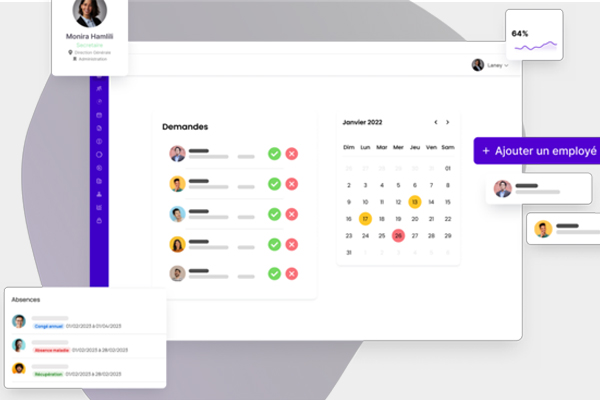
That big board isn't necessary anymore. You know, the one in the break room that lists the names of absent employees, their vacation dates, paid time off, maternity/paternity leave, or an afternoon appointment. It used to be useful, but an HRIS provides a more timely, accurate, and measurable way to track who is present and who is absent.
2. Recruitment and Follow-up of Candidates
An HRIS can be useful not only for managing today’s employees, but also those of tomorrow. Every step of the recruitment process—from the initial contact with the candidate through the interview and final offer—can be managed and tracked through the system. And key team members can view this information in real time. This eliminates unnecessary mistakes (such as bringing the wrong person to an interview) and questions from employees about a candidate’s status.
3. Training Follow-Up
One of the things many HR departments try to do is foster growth within their workforce. And, of course, one way to achieve this is by offering external training and developing internal skills.
Links to external training opportunities can be included in individual employee profiles or in the broader training section of the HRIS. You could also use the scheduling feature to coordinate internal cross-training and upskilling opportunities.
4. Resolving Compliance Issues
HR, accounting, the legal department, product development… many departments within a company pay close attention to legal compliance. Ensuring compliance can be particularly challenging for the HR department of a company with operations in multiple states or even a multinational corporation.
Your HRIS can help alleviate some of these concerns by allowing you to:
- Store all compliance-related documentation in a centralized location
- Set up alerts for specific compliance-related issues. For example, a trial period is about to end, and you need to be notified.
5. Self-service for managers and employees
It all starts with an email. Then comes the phone call. Finally, you stop by the employee’s desk to ask for a specific piece of information to complete their file. That:
- It takes a lot of time
- Prevents you from completing other tasks
- It makes you look like the bad guy or the “document cop”
With an HRIS, this entire process becomes less cumbersome, as many steps are automated. This change in process also helps employees feel more connected to their professional growth journey.
6. Improved Efficiency
Everyone in HR knows that efficiency and speed are essential, especially during unexpected crises. With an HRIS, it’s easier to gather information about employees, and thanks to its organizational features (including search filters, storage categories, and document views), it’s easier to find that information whenever you need it.
This will, of course, lead to improved productivity, which could mean you'll have time to develop many of the employee support programs you've always wanted to launch.
7. Benefits Administration
Every employee wants to be proud of where they work and to trust the system. But when they have to visit four different websites and dig out their paper enrollment forms just to ask about insurance, that trust is likely to give way to frustration. And unfortunately, that frustration often gets directed at HR.
But an HRIS can help maintain that trust by providing a single platform that can connect to all related systems to easily provide access to details about employee benefits.
8. Master Data Management (MDM)
Where are all the relevant HR documents? Stored on a flash drive? Maybe on the old server? Is the latest version on your desktop? In a Teams folder? Are they hidden in emails? Is it something you shared on Slack?
Document management has always been a concern, and that concern has only grown as we’ve increasingly shifted to a virtual work environment. An HRIS provides a centralized location for all important HR documents, starting with that initial recruitment contact. Plus, its self-service features mean that employees can download and view the documents they need, whenever they need them. And no matter when, they’ll always have the right version.
What an HRIS Doesn't Do:
There is one thing an HRIS does not do: it does not replace the human element of HR. The heart and soul of HR have always been its ability to show empathy while helping the company’s employees reach their full potential.
Benefits of Using HRIS Software
Some HR managers may be under the (false) impression that their company is “not big enough” to derive real benefits from an HRIS in terms of talent management. In reality, there are many benefits that any HR team could gain by using HRIS software.
Four of the main benefits are as follows:
- The ability to capture and customize employee information in real time
- Have a centralized location to store all HR documents for easy access
- Simplifying Recruitment Processes
- Provide employees with a self-service portal to help them take a more active role in their professional development
Why use an HRIS?
Using an HRIS allows managers to focus more on the tactical aspects of their work, including:
- Increased Productivity
- Strengthening Commitment
- Reduction in Turnover Rate
You don't want to leave these decisions to chance, which is why software provides HR managers with the tools they need to analyze data and identify trends.
How does HR software help employees?
The benefits of HR software don't stop there. Employees will also have access to self-service features.
Mobile accessibility allows employees to access what they need, no matter where they are.
Smarter planning tools for things like job swaps give employees more control over their time.
Ultimately, when companies are able to devote more resources to the strategic aspects of HR—such as training and development, compensation planning, and performance management—employees benefit. And when that happens, the company benefits as well.
How can Talenteo help you?
Talenteo develops HR software for leaders who want to make a difference. Our motto? We listen to and work in partnership with our clients to understand what they need: time-saving HR technology, powerful analytics that provide actionable insights, and dedicated support from HR experts. That’s why so many companies trust Talenteo to help them solve problems and achieve their goals.